
Smile Laser in Turkey

Although Turkey is highly developed in medical tourism, especially based in Istanbul, Turkish medical has become a pioneer especially in hair transplantation, cardiovascular surgery, plastic surgery and laser eye surgery. If we talk about other eye surgeries, Smile Laser in Turkey technology catches our eye.

Smile Laser in Turkey is attracting attention as a new eye treatment option for patients suffering from myopia, astigmatic and eye dryness rather than using of glasses and contact lenses. With Smile Laser in Turkey technology, successful results are obtained even in very high degrees of myopia and astigmatic. Patients who have problems with eye dryness can now be safely treated with this method.
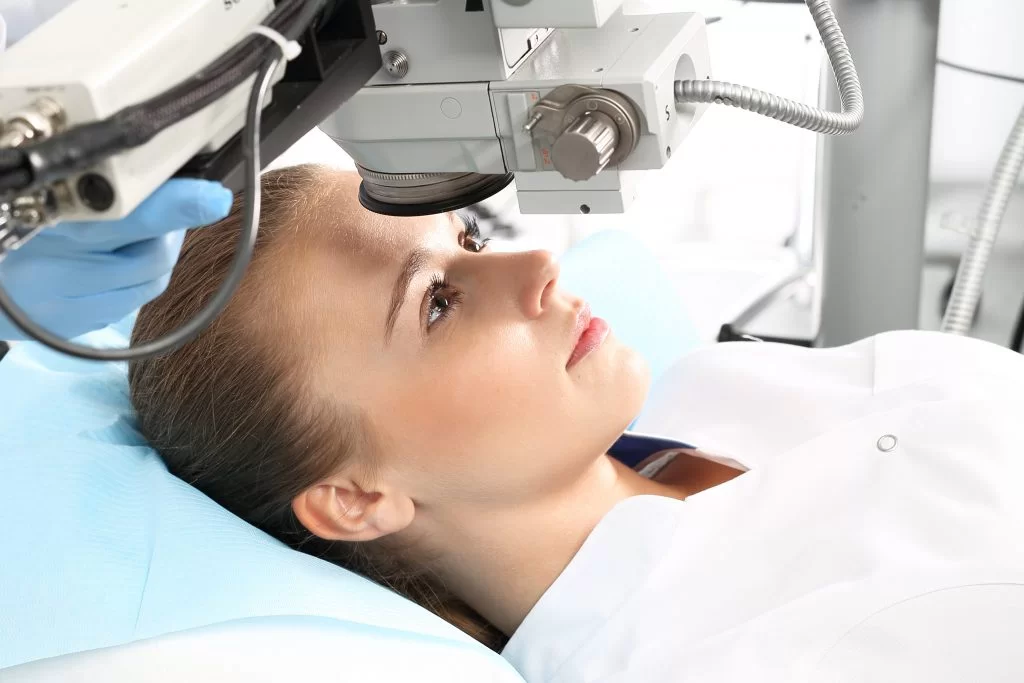

What is the Difference of Smile Laser in Turkey?

SMILE (Small Precision Lenticule Extraction) and No-Touch Laser technologies have been attracting attention as an eye treatment method for myopia and astigmatic in recent years. With these latest laser eye technologies, successful results are obtained in myopia and astigmatic problems, and less dry eyes problems occur after the laser.

Smile Laser Surgery Benefits in Turkey

Relex Smile eye surgery, which is a 3rd generation laser refraction surgery, it is performed using the femtosecond laser VisuMax the patented technology of Carl Zeiss Meditech instead of Femto Lasik Excimer Laser.

A femtosecond laser is used to create a small, lens-shaped tissue (lenticule) in the cornea. In surgery, a small arc-shaped incision is made on the surface of the cornea with the same laser, and the lenticule is removed from this small incision. When the tiny lenticule extraction is done, its myopia is treated and the cornea shape is changed. The corneal incision heals in just a few days, and sharp vision occurs very quickly.

Overall advantages of Smile Laser in Turkey surgery include:

  • There is a corneal and refractive consistency.
  • There is a low probability of eye dryness.
  • There is a rapid recovery period.
  • It is the minimal invasive operation on the surface of the eye.
  • There are no problems with the structural durability of the eye.
  • Fast laser technology is used with 500kHz.
  • Lidless technique is applied.

Treatment and Risks

Who Is Smile Laser Surgery Suitable for?

Although Smile Laser in Turkey, which is used to treat myopia and astigmatic patients, is used in hypermetropia patients in some countries, it has not yet been fully clarified in terms of its results.

In order to have Smile Laser in Turkey surgery, a person must be over the age of 18 and their eye number has not changed in the last year. In the same way, those who have a myopia degree between -1.00 and -10.00 degrees and those who have an astigmatic degree not greater than -5.00 can have Smile Laser in Turkey surgery. In addition, the condition of good general health of the cornea and eye is sought.

Refractive surgery is performed at the very front of the eye cornea it is applied with Carl Zeiss VisuMax Femtosecond technology on the layer.

First of all, anesthetic eye drops are instilled into the patient’s eye that eliminate the sensation of pain and ensure that the patient does not feel pain.

Contact is ensured between the laser device and the eye in such a way that complete compliance is achieved.

A femtosecond laser creates a laser incision in the cornea in two planes, one in front and one in the background. This corneal tissue, the anterior and posterior border of which is determined by laser software, is called a lenticule. So, the lenticule is part of the cornea.

The shape and size of the lenticule are determined by the software of the laser device for resetting the person’s eye degree.

It is necessary to remove the formed lenticule from the cornea. For this reason, a small corneal incision is created on the surface of the cornea so that it is adjacent to the lens, and from there the lens is removed outside the cornea.

Smile Laser in Turkey Risks

As with any procedure, in Smile Laser in Turkey surgery patient can be experienced some possible risks, complications and side effects. Some of these risks are;

  • Night vision problems
  • Formation of damage to the cornea
  • Occurrence of infection
  • Experiencing inflammation
  • Blurred vision problems
  • Double vision problems
Contact
close slider